


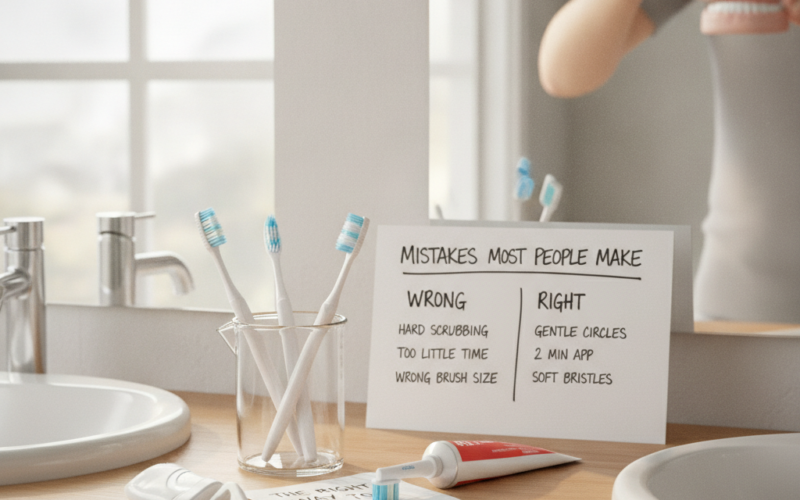
Are You Brushing Your Teeth Wrong? A Dentist’s Guide to Perfection
Brushing your teeth is a ritual so ingrained in our daily lives that we rarely give it a second thought. You grab your brush, apply toothpaste, and scrub away. But what if this twice-a-day habit, the very foundation of your oral health, is being done incorrectly? It’s a startling thought, but the truth is that most people make critical errors in their brushing technique—mistakes that can lead to cavities, gum disease, and enamel erosion over time.
This isn’t about shaming your lifelong habits. It’s about upgrading them. Think of this as a masterclass in the art and science of brushing. By understanding the common pitfalls and adopting the correct technique, you can transform a mundane chore into a powerful act of self-care that will keep your smile bright and healthy for years to come.
The Foundation: Choosing Your Tools Wisely
Before we even discuss technique, let’s look at the tools of the trade. The right toothbrush and toothpaste are not just matters of personal preference; they are crucial for effective and safe cleaning.
The Toothbrush Dilemma: Soft vs. Hard Bristles
Walk down the dental care aisle, and you’ll see brushes labeled soft, medium, and hard. Many people assume that harder bristles mean a more thorough clean. This is one of the most damaging myths in dental care. Hard-bristled toothbrushes are an enemy to your oral health. They can scrub away your tooth’s protective enamel and cause your gums to recede, exposing the sensitive root of the tooth.
The verdict is clear: always choose a soft-bristled toothbrush. The bristles are flexible enough to bend and clean gently beneath the gum line, where plaque loves to hide, without causing damage.
Fluoride is Your Friend: Selecting the Right Toothpaste
With countless options promising whitening, tartar control, and fresh breath, choosing a toothpaste can be overwhelming. While these features are great, there is one non-negotiable ingredient: fluoride. Fluoride is a mineral that actively strengthens tooth enamel and helps remineralize areas that have been attacked by acids, making your teeth more resistant to cavities.
The Most Common Teeth Brushing Mistakes (And How to Fix Them)
Now, let’s dive into the technique. It’s time to unlearn the bad habits and master the art of the perfect brush.
Mistake #1: Brushing Too Hard (The “Scrubbing” Fallacy)
Plaque is soft and sticky; it doesn’t require aggressive force to be removed. Brushing with too much pressure—what we call “scrubbing”—doesn’t get your teeth cleaner. Instead, it wears down your enamel and damages your gums. Think of it as polishing a precious gem, not scrubbing a dirty floor.
The Fix: Hold your toothbrush with a light grip, using just your fingertips, not a clenched fist. The bristles should gently massage your teeth and gums, not mash against them.
Mistake #2: Rushing the Process (The 30-Second Dash)
Life is busy, but your oral hygiene routine is not the place to cut corners. The American Dental Association (ADA) recommends brushing for two full minutes, twice a day. Most people fall drastically short of this, often brushing for only 30-45 seconds. This simply isn’t enough time to thoroughly clean all the surfaces of your 32 teeth.
The Fix: Use a timer! Your phone, a kitchen timer, or an electric toothbrush with a built-in quad-pacer can help you stay on track. Divide your mouth into four quadrants (upper right, upper left, lower right, lower left) and spend 30 seconds on each.
Mistake #3: Using the Wrong Angle and Motion
The most common but incorrect motion is a vigorous back-and-forth sawing motion across the teeth. This is ineffective at cleaning the critical area near the gum line and can even cause notches in your teeth over time.
The Fix: Employ the Modified Bass Technique. Angle your brush at 45 degrees toward your gum line. Use short, gentle, circular strokes or vibrating back-and-forth motions to dislodge plaque. After a few strokes, sweep or roll the brush away from the gum line to clear the debris.
Mistake #4: Neglecting the Inner Surfaces and Molars
It’s easy to focus on the front teeth—the ones people see when you smile. But the inner surfaces (lingual side) and the chewing surfaces of your back molars are where plaque often accumulates unnoticed. These are prime spots for cavities and tartar buildup.
The Fix: Be systematic. Make a conscious effort to brush the outside, inside, and chewing surface of every single tooth. For the inside of your front teeth, turn the brush vertically and use gentle up-and-down strokes.
Mistake #5: Forgetting Your Tongue
Your teeth are clean, but what about your tongue? The tongue’s rough surface is a perfect breeding ground for bacteria that cause halitosis (bad breath). Skipping this step means you’re leaving a major source of bacteria behind in your mouth.
The Fix: After brushing your teeth, gently brush your tongue from back to front. This removes bacteria and food particles, leaving your mouth feeling and smelling fresher.
Building the Perfect Oral Hygiene Routine
Brushing is the star player, but it needs a supporting cast to be truly effective.
- Flossing: Brushing can’t reach the tight spaces between your teeth. Flossing once a day is essential to remove plaque and food from these areas.
- Rinsing: An antimicrobial mouthwash can help reduce bacteria, but timing is key. Avoid rinsing immediately after brushing, as this can wash away the concentrated fluoride from your toothpaste. Wait at least 30 minutes.
- Toothbrush Care: Your toothbrush can’t do its job if it’s old and dirty. Rinse it well after each use, store it upright to air dry, and replace it every 3-4 months or as soon as the bristles become frayed.
A Smarter Brush for a Healthier Smile
Mastering the right way to brush your teeth is one of the simplest yet most impactful investments you can make in your long-term health. It’s not about adding more time to your routine; it’s about making that time count. By swapping force for finesse and haste for mindfulness, you protect your smile from harm and ensure it stays healthy, strong, and brilliant for a lifetime.